Namibia Sossusvlei dunes

Namibia Sossusvlei dunes
Namibian memories
Showing posts with label summer. Show all posts

Monday, 26 February 2018

Travel Plan 2018: Sicily!


Sicily is our travel plan for July 2018. Nothing better than Italian sea, sun and food! Unfortunately, we only have 5-6 days, so we'll have to do a lot of choosing. There is so much to see, do and eat in this island!

Let's start practical: from Treviso airport, there's Ryanair daily flights to both Catania and Palermo. From Venice, a daily flight to both Palermo and Catania with Alitalia (according to Rome2rio), and on Mondays to Catania with Volotea. We'll see how much they are and how much stuff we need to pack! What about flying back to Budapest? Wizzair flies from Catania on Saturday - this is already sooo expensive, but it could be useful to let us recover on Sunday before going back to work - or we could have a Ryanair layover in Treviso on Sunday. Ryanair also flies from Palermo to Budapest on Sunday and is cheaper (at the moment).

Because this is the decision to take: which side of Sicily do we choose? Palermo and the West, or Catania and the East? That is the question. It is such a struggle to open google images and check out the Duomo of Monreale, the streets of Palermo, the beaches of Favignana island, the Temples in Agrigento, the Etna vulcano, the sea of Eolian islands... Come oooon, how can we choose? It's supposed to be a holiday, and I'm already stressed :D

No, focus: in July, it will be roasting hot. A great plan should feature a lot of relaxing beaches and sea, some interesting sights and history, and very little stressful Italian driving. I'm not even mentioning food, as it will be there with us every couple of hours without making any effort. Strategic accommodation is needed in 1 or 2 towns.

If we choose Palermo, the highlights could be:
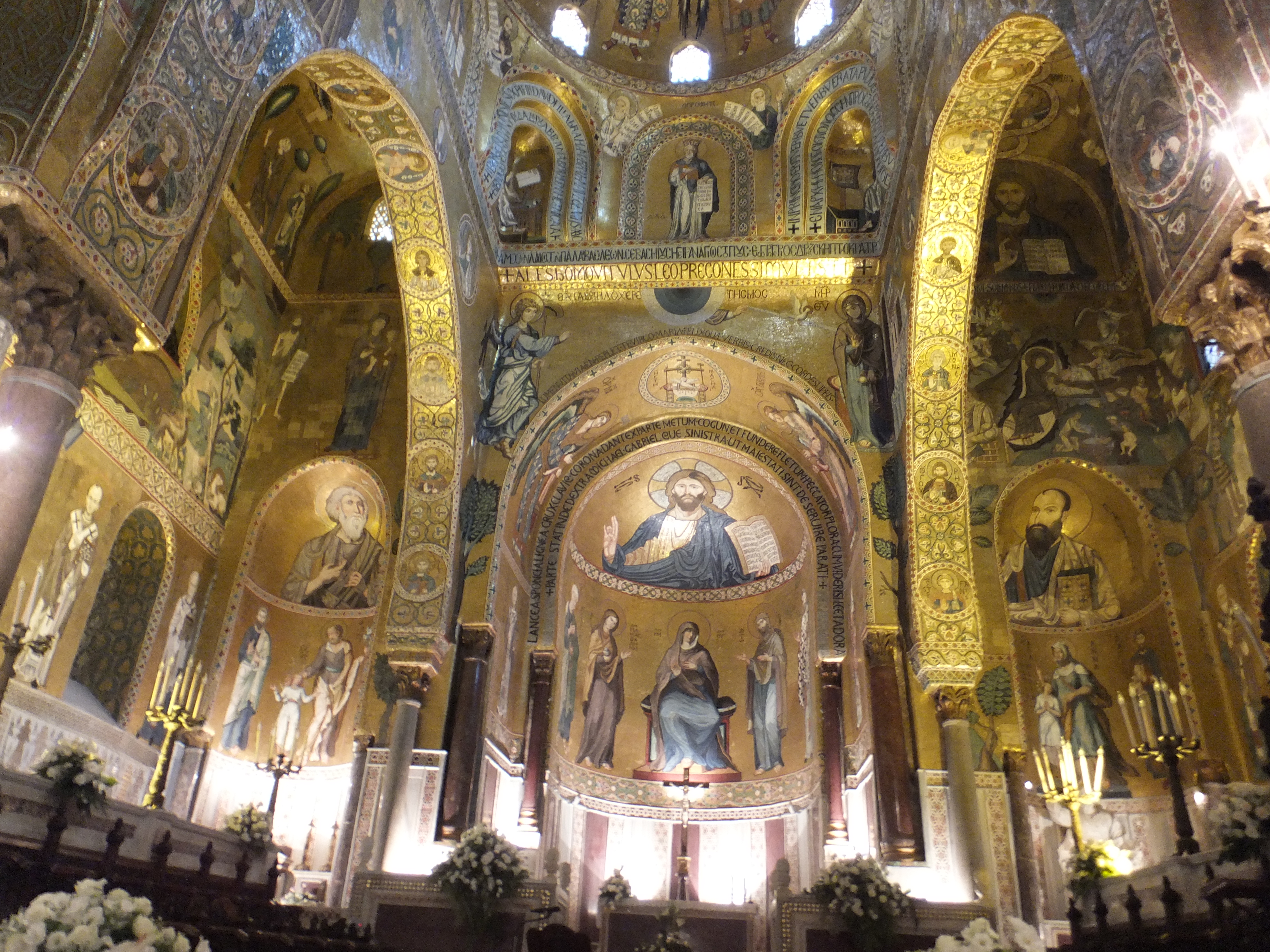
  • Palermo itself, with centuries of history and amazing attractions, like the Palace of the Normans, Cappella Palatina, the Cathedral, and of course much more
  • The Duomo of Monreale
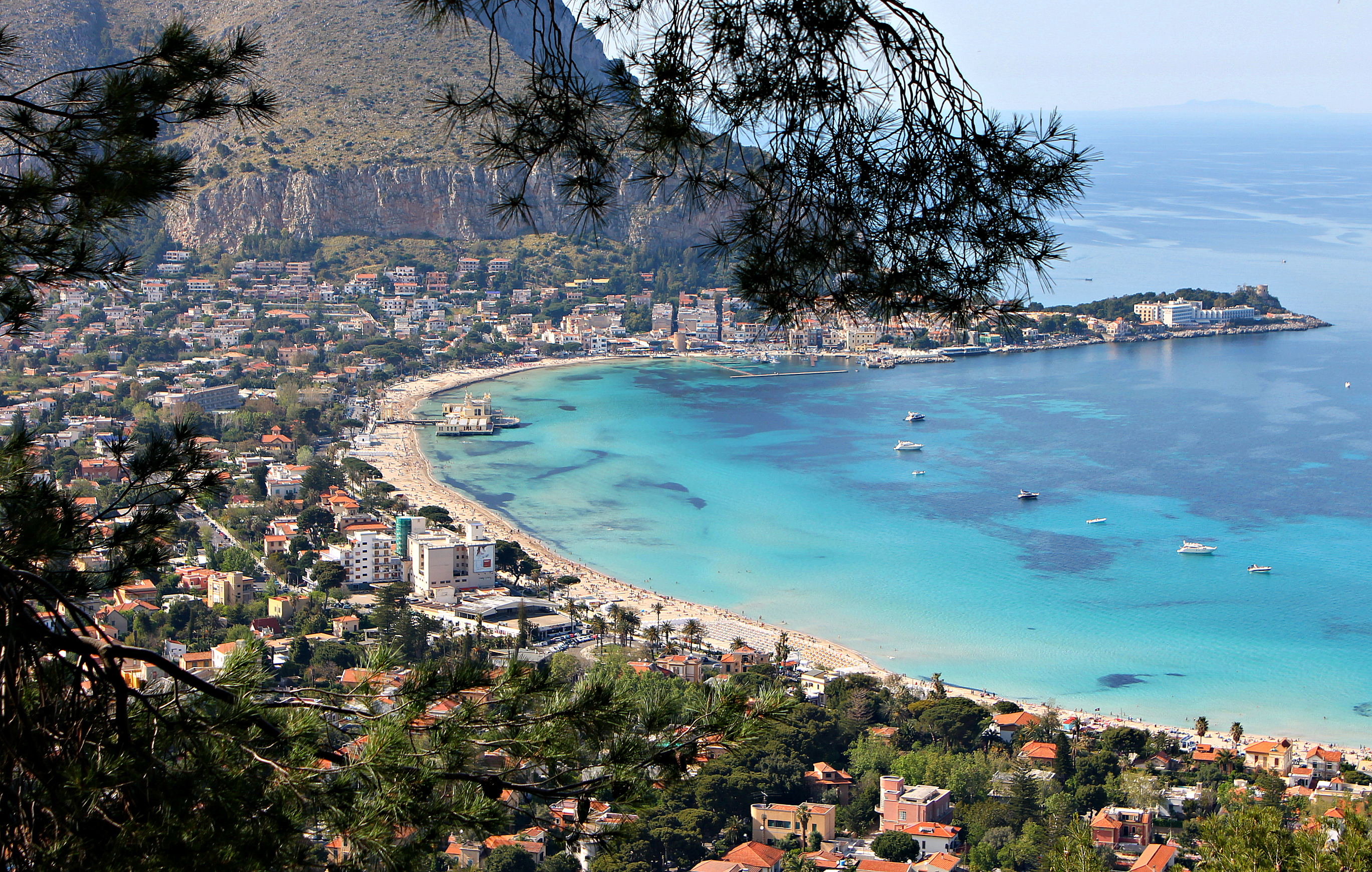
  • The beach of Mondello or Isola delle Femmine
  • To the West, San Vito lo Capo, a 2-hour drive from Palermo
  • More to the West, Favignana Island, reachable from Trapani by ferry
  • Or to the East, Cefalú

Cappella Palatina in Palermo
By Fintan Corrigan of http://friendly-hotels.com -
Own work, CC BY-SA 4.0,
https://commons.wikimedia.org/w/index.php?curid=35670228

The Gulf and beach of Mondello
By Andrea Calcagno from PALERMO, Italia - il golfo di Mondello, CC BY-SA 2.0,
 https://commons.wikimedia.org/w/index.php?curid=24992690
By Roberto Fontana from Mantova, Italia - San Vito Lo Capo,
CC BY 2.0, https://commons.wikimedia.org/w/index.php?curid=24319385
Favignana Island
By ChrisO at the English language Wikipedia, CC BY-SA 3.0,
https://commons.wikimedia.org/w/index.php?curid=864748

On the other hand, around Catania, we would visit:
  • Catania, itself, with sights from roman, medieval and baroque age
  • The Etna vulcano
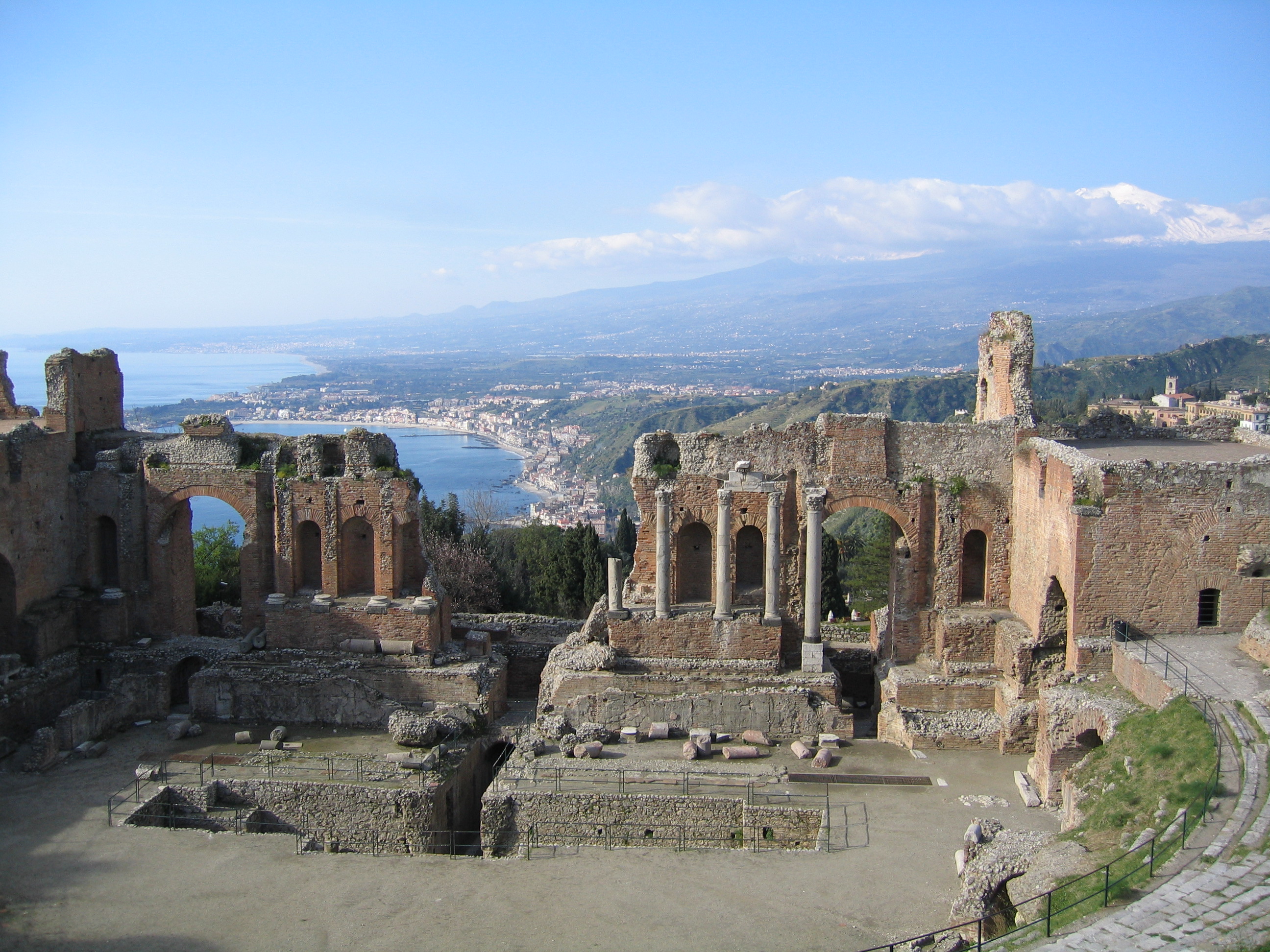
  • Taormina, its ancient Greek theatre, the beach and Isola Bella
  • Wine tasting of local Etna Rosso
  • More to the North, the gorgeous Eolian islands, with another vulcano
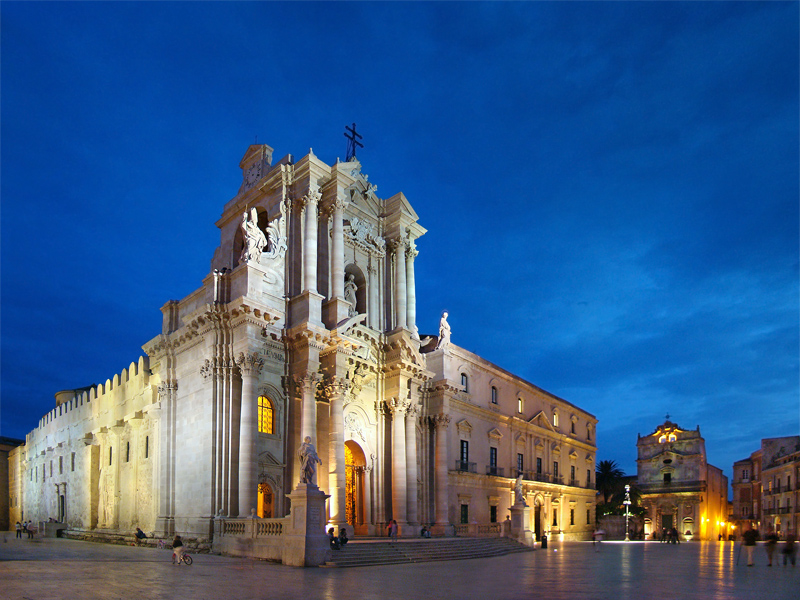
  • To the South instead, Siracusa and architectural marvels

Southern flank of Mount Etna showing lateral cones and flow from eruption of 2001.
By Wilson44691 - Own work, CC0,
https://commons.wikimedia.org/w/index.php?curid=26777320
The Greek Theater in Taormina
By Evan Erickson - Own work, Public Domain,
https://commons.wikimedia.org/w/index.php?curid=5744732
By Giovanni from Catania, Sicily - Eolian Islands from top of Vulcano island,
CC BY-SA 2.0, https://commons.wikimedia.org/w/index.php?curid=2139853
Duomo Square in Siracusa
By Tango7174 - Own work, GFDL,
https://commons.wikimedia.org/w/index.php?curid=15545258

And what about Agrigento and its incredible Greek temples?

Temple of Concordia
By General Cucombre from New York, USA - Valle dei Templi 3214
Uploaded by Markos90, CC BY 2.0,
https://commons.wikimedia.org/w/index.php?curid=22793141
It's very motivating that many itineraries available online, like this by Frommers, this by Sicilian Secret Tours, this by the Telegraph, this by Lonely Planet,  or this generic advice on Eastern Sicily by the Guardian, include A LOT of sights, which makes me hope that the distances are manageable and the crowd is not overwhelming.

More research is needed. But we are so excited! Have you ever visited Sicily? What do you advise? Let us know! :)


Sunday, 13 August 2017

Hike to Visegrad, a day trip from Budapest

Hello! Thank you for stopping by!
We have moved this article to our improved and updated blog. Come and read the best itinerary for an easy Visegrad hike!


Fellow traveller, do you have a spare day while in Budapest? Fellow local, do you crave some time in the nature? Visegrad is the perfect destination for a day trip! And if you follow our instructions, it won’t even require a big effort or a big budget.
The Danube Bend from Visegrad Castle
Located some 50 km north of Budapest, Visegrad is a small town that offers a gorgeous view of the Danube bend and the surrounding hills, many hiking trails and fun activities, and interesting insights in the history of Hungary and Europe inside the Visegrad Castle.

When is it best to go? How long does it take?
Spring, summer and autumn are best to enjoy the beautiful scenery of hills and river. Just avoid a cloudy or foggy day! Calculate some 8 hours, but if you hurry or bring lunch with you, you could make it in 6.
Check out the opening hours of Zsitvay Lookout Tower and of Visegrad Castle.

Get ready and bring:
  • comfortable clothing and shoes for the trail
  • water (there are some fountains to fill your bottle from) and snacks
  • Hungarian forints, as credit cards and other currencies may not be accepted
  • a guidebook/notes/info on your phone about the history of the castle
  • download the offline area on Google Maps and star-save the highlights

How much does it cost?
As of June 2017:
  • HUF 840 bus from Budapest
  • HUF 420 snack
  • HUF 400 Zsitvay lookout tower
  • HUF 1400 Visegrad Castle without wax museum
  • HUF 3390 nice lunch in town centre
  • HUF 420 ferry across the Danube river
  • HUF 1120 train back to Budapest
TOTAL: HUF 7990 / 300 = 26.6333 EUR
Or HUF 4600 / 300 = 15.3333 EUR without lunch

Energy-saving itinerary:
Our super-knowledgeable friend and tour guide Adam Marot of Behind Budapest prepared an easy itinerary: by taking the bus to the top of the hill, the effort was minimal!

We started from Budapest at the Ujpest Bus Station (map) (north of Pest) where we took bus 883 by Volanbusz (timetable) at 10.15. After one and a half hour, we got off at stop Visegradi Bobpalya, which saved us all the effort of climbing up the hill from the town of Visegrad, by the river.

We had a quick snack with coffee and Hungarian bread “Pogacsa” and walked up to the Zsitvay Lookout tower (map), a nice stone building erected in 1933. From the meadow in front of it, it’s just hills and birds chirping! Being on top of a hill 378 meters high, we loved the breathtaking view from the top of the tower, of river, hills and forests, islands and towns, and most of all, our next stop, the Castle of Visegrad.

Zsitvay lookout tower


Climbing up

From the Zsitvay lookout tower: the Danube bend and the Visegrad castle
Of course, the main road can take you down to the Castle, but we chose instead a lovely, peaceful trail in the woods, very easy to follow as it is marked on trees and stones with a white flag with a horizontal blue stripe, direction “Visegradi Fellegvar”.

In 10-15 minutes, we reached the Visegrad Castle (map). Being a Sunday in early June, there were many school kids on a day hike, but luckily we entered the castle around lunchtime, so it wasn’t too crowded.
Before reaching the viewpoint by the walls, there are already fun medieval attractions, like arrow shooting, throwing a spiked rusty weapon to a wood log, a trainer with a falcon, and two royal seats with suitable clothing ready for a costume picture.
The view from the walls is very picturesque: the Danube river flows peaceful and wide, confident among lush hills and red-roofed villages, and behind you the ruins of the castle walls rise high and bold. Thanks to a rising Hungarian flag, it is also a very patriotic spot!

Hungarian pride!

Access to the castle
As there are not many explanations available in English, it is worth reading up a little ahead, or bringing a guidebook with you. The first Citadel was built by King Béla IV in 1246 because of the Mongol invasions, to protect the valley and the commercial route. It was expanded into a larger fortress during the Anjou era, and King Charles Robert moved the royal court here in 1323. This King also organized a Congress with the kings of Bohemia and Poland to solve issues among them, open new commercial routes, and create an alliance against the Habsburgs. The Castle was left to ruins in the 18th century, when the Habsburgs ruled the Austro-Hungarian Empire. Excavations and reconstructions started in 1871; some parts of the walls are visibly new, made of concrete and bricks, giving the visitor a real sense of what remained and what is rebuilt.


Inside the Visegrad Castle

Gorgeous view of the Danube Bend from Visegrad Castle
We took our time to explore the different halls, levels and viewpoints. At 3.30 pm we were on our way, through the woods again, downhill towards Visegrad. We passed by a little chapel called Kalvaria Kapolna (map) and reached the city centre at the cutest staircase overlooking the red roofs, right behind the church.

We enjoyed a resting lunch at a pizzeria right by the main church, and then headed to out last attraction. The Solomon tower (map) is the Low castle, located on a small hill by the river, where the walls started to rise up to the High castle. Also here, the recent restorations show very clearly what remained of the original tower and what was rebuilt; unfortunately, the result is not the most beautiful medieval tower ever. Anyway, it is quite picturesque and the view is again gorgeous.

The renovated side of Solomon Tower

The old side of Solomon Tower
We decided to take the train back, so we had to cross the Danube. The ferry from Visegrad to Nagymaros (map) offered us the best panorama to close our hike: peaceful river, steep hill and ruins on the top, a true postcard! And finally, a 50-minutes train ride back (schedule) from Nagymaros to Budapest Nyugati Station (map). 


View of Visegrad Castle on top of the hill,
and Solomon Tower down below,
from the ferry
What else?
  • The bobsled track close to Visegrad Castle must be fun!
  • The city centre may deserve 10 minutes for a stroll
  • In the surroundings there is a spa called Lepence, for some relax.

Did you know this place? Did you try our itinerary? Let us know in the comments!

Sunday, 30 April 2017

Mantova, Italy: what to see and do

The second part of our nostalgic trip to Italy took us to Mantova, the town where my grandmother, aunt and uncle live. As a child, for me it was the town of shopping, multi-screen cinema, and unbearable summer heat; later, it became the beloved setting of the largest and most famous literature festival in Italy, Festivaletteratura, where I was a proud intern for one edition, and one of the reasons why we came: the festival brings such a special and energetic vibe to the city for 5 days, with hundreds of events in famous and hidden venues . Now and for the rest of my adult life, it will be a charming little Italian town where I will feel at home, but that will always surprise me with a detail I had not noticed before.

Mantova in 10+3 sights

You could probably spend just a day in the small city centre that blossomed during the Renaissance, in the 15th and 16th century. However, as every respectable UNESCO World Heritage Sites, the numerous hidden gems can keep you there easily for more days. Key practical advice: comfortable shoes, a scarf for ladies who wish to enter churches, and patience with the weather, as it can be very foggy during the winter and terribly hot during the summer.

The simplest sightseeing stroll is a straight line across the square-ish city centre, towards the lakes that surround three sides of it.
Start at the Teatro Sociale (map 1), where the romantic "Rio" Canal connects Superior and Inferior lakes, turning the downtown into an island.
Walk along Corso Umberto, a (almost) pedestrian street with porticoes on both sides, boutiques and cafés, as you start to imagine how it must have been living there 600 years ago. Small Piazza Andrea Mantegna square opens your view to the imposing yet perfectly fitting Basilica di Sant'Andrea (map 2), a masterpiece of Renaissance art and architecture by Leon Battista Alberti and later Filippo Juvarra. Go inside to admire the mind-blowing size of its vault, its late 18th-century decorations, and the incredible height of its dome, all gracefully hidden and adjusted from the outside.


Sant'Andrea Basilica façade

Sant'Andrea Basilica interior

Continue by the side of the church to Piazza delle Erbe (map 3). BONUS: check out the ground floor of the building right opposite the bookstore/infopoint at the corner of the church: under the columns of the porticoes, carved tiles show the items sold in the store during the Renaissance!
Beautiful Piazza delle Erbe showcases the Rotonda Church (map 4), the most ancient church in the city (you can "buy" a brick!), and the astronomical clock built in 1473 on the tower of the Palazzo della Ragione (map 5). On Thursdays, the market fills up the square and the surrounding streets.


Astronomical clock tower and Rotonda Church

Keep the square to your right, past the Palazzo del Podestá, to small Piazza Broletto Square (map 6). BONUS: take the side street to the left to reach small Piazza Leon Battista Alberti square at the back of the Basilica, where you can admire the naked bricks of its side, right below the stunning dome.
Keep going under the vault to reach the main square, Piazza Sordello Square (map 7), long and rectangular, surrounded by a frame of historical buildings that have seen 6 or 7 centuries pass by. In front of you, the Duomo (map 8), a very geometric cathedral, not as magnificent as Sant'Andrea Basilica, but still unique in its combination of architectural styles.

Duomo Cathedral exterior

Duomo Cathedral interior

To your right, close to the Duomo, the Ducal Palace (map 9), the enormous residence of the powerful Gonzaga family for 400 years. Built and expanded over several centuries, its 500 rooms provide a chance to travel in time, from a gigantic fresco by Pisanello of the 15th century, to halls and corridors decorated with excessive baroque details, until the masterpiece inside the Castle of San Giorgio: the Bridal Chamber, painted by Mantegna from 1465 to 1475 with an innovative technique that creates an illusion of space, opening the room to countryside scenes and to the sky above. It is so beautiful and delicate that access is restricted: better book in advance! No need to tell you that it's very easy to spend a whole afternoon in here (or a whole morning, to beat the crowd), and the Palace is so beautiful and interesting that it is time well spent.


Ducal Palace ceiling of Bridal Chamber

Ducal Palace Hall of Mirrors (Sala degli Specchi)

Last stop of the stroll: turn around the Ducal Palace to reach the Castle of San Giorgio (map 10), the park in front of it and the lakes, and end your walk with a medieval selfie. BONUS: for a view of the unique skyline, walk a little bit on the bridge opposite the castle!


Behind us, Castle of San Giorgio
Want more?
2 places to visit close to the Ducal Palace and the lake:
  • Bibiena Theatre (map): this masterpiece of baroque architecture hosted Mozart in 1770, when he was just 14 years old. Worth visiting it, but it's also perfect to attend a performance there.
  • Fire Brigade Museum (Galleria Storica Nazionale dei Vigili del Fuoco map): a beautiful exhibition of firefighter trucks, cars, motorcycles and even helicopters since the 1800's, very interesting and absolutely surprising!
A few minutes away from the centre:
  • Casa del Mantegna (mapwith its unique circular courtyard included in a square, high external wall
  • Palazzo Te (map) a beautiful mannerist palace with gardens. You will be amazed by the fury of the giants in the Sala dei Giganti, decorated until the ceiling with a havoc of crumbling city and vengeful sky.
Just want to relax?

Eat, drink and enjoy life:
  • Have a coffee at La Bottega del Caffé, standing at the counter, Italian style! Great coffee blends and pastries, plus locals taking a break.
  • Delicious gelato at Gelateria Pappa Reale, worth the walk
  • Lunch at LaCucina, very Italian with a twist
  • Dinner at Bottega d'Arte Gastronomica also Italian but surprising, or at Tiratappi for local cuisine: unmissable risotto with local sausage and ravioli with pumpkin filling
  • Very local and rough drinks at Bar Lasagne or fancier cocktails and atmosphere at Papa's - bring insect repellant!

Make the most of your visit by hiring a guide! I am proud to recommend my aunt Francesca Camerati at Guide Virgilio, a very professional team of multi-language guides - my aunt guides in Italian, French, Spanish and English! Not only key info on history, art and architecture, but also interesting anecdotes and secret details, to make the time available even more valuable and the city even more surprising.

More useful and interesting tips by the Guardian and by Italy Magazine.


Enjoy Mantova and let us know what you think in the comments! Cheers :)

Sunday, 23 April 2017

Bologna Travel Vlog - new video out!

Two lovely days in beautiful Bologna: lots of sunshine, walking, architecture, history and food! Get inspired for your next city break with our video :) 


More tips on what to do and see here and feed your hungry soul with our tips.
Looking forward to your feedback! Cheers :)

Wednesday, 22 February 2017

Our video in Trieste, Italy

Enjoy some warm Italian sun, gorgeous architecture, a glimpse of sea and cool live jazz music in the video of our city break in Trieste :)


And find our full itinerary here.
Let us know what you think in the comments! Cheers!

Wednesday, 8 February 2017

Bologna to eat

Hi! Come see the updated version of this post here: https://travellingsunglasses.com/what-to-eat-in-bologna-best-food/ 


The heart of a wealthy area, of course the food in Bologna is full of strong flavours and meatTraditional local food in Bologna so good you may actually plan your trip around meals... like I did ;) 
Our advice:

Piadina: a round, flat bread folded in half and filled with cold cuts, cheese and vegetables. The classic is piadina with prosciutto crudo, ruccola and squaquerone cheese (very fresh and soft), but plenty of variations are available. Our favourites are La Tua Piadina in Santo Stefano and La Tua Piadina al Pratello 
Tortellini: Bologna and Modena will fight until the end of time for the ownership of this delicacy. Buy it fresh or dry in the family-run shops between Via Caprarie and Via Clavature, for example at the Paolo Atti's bakery, and order it in almost any restaurant wish butter and sage, cream, or cream and sausage. We loved it at Capra e Cavoli, on Via del Pratello 
Tigelle e crescentine: these two special types of bread are served hot in a basket together with a selection of cold cuts, cheese to spread and pickled vegetables. Delicious! We loved it at Il Circolino Trattoria Emiliana 
Hand-made pasta: not only tortellini, but also larger tortelli and ravioli, tagliatelle, and curly gramigna. The best place ever is the PastaFresca Naldi, a tiny workshop managed by three generations of women, where you order in September your tortellini for Christmas. Their pasta is served with ad-hoc hand-made sauce in a tinfoil container, and you eat it perched on high stools on a counter by the wall, in the most friendly and down-to-earth fashion. Keep some space in your stomach for the mouth-watering pannacotta and creme caramel.
Camera a Sud
Wine: the local production is Sangiovese, a simple red wine that matches perfectly meat and pasta, although the Italian selection available is obviously huge. Our favourite bars are Camera A Sud, a mix-and-match of furniture and books in the heart of the Jewish district with very helpful staff; Vineria Favalli, large selection of uncommon wines and tasty bread-and-olives snacks before dinner; Bar Modo Infoshop and Lortica, great to see the cool and hipster locals.
Coffee: paradise for espresso lovers! We recommend the unique setting over the secret canal of Bologna at the Opera Caffé e Tulipani (ask for the balcony!), and the delicious "pasticciotti" little custard cakes from Puglia (the heel of Italy) baked at I Sapori della Taranta
Cold cuts and cheese: don't miss mortadella, a soft white-dotted ham, and "ciccioli",  fried little bites of pork meat and everything of the pork that could not be used. Among the great local cheese, the soft and fresh stracchino and squaquerone; another Italian classic difficult to find abroad is mozzarella stracciatella, a super fresh mozzarella cheese still dripping milk when you tear it open, absolutely divine.
Pasticciotti and coffee at
I Sapori della Taranta
Aperitivo: at Caffé Zamboni, buy a drink (5-10 euros) and access the buffet for free! Pasta, meat, vegetables, cous cous, cheese, desserts... It's paradise! It's quite common in Bologna, so keep your eyes open for other places.
Bolognese Sauce: yes, it is a sauce made of minced meat, tomato sauce and other vegetables. No, it is not the bolognese sauce that you find abroad. Also not, it is not served on spaghetti, but on different types of pasta, for example tagliatelle. Most importantly, in Italian we call it "ragú". It is delicious, don't miss it!

RESTAURANTS WORTH MENTIONING
Good atmosphere, friendly and affordable for local cuisine:
Osteria Le Sette Chiese  - tiny place, must book ahead
Osteria del Sole - a true tavern, order wine or beer at the bar and you can bring your own food! Excellent match with the pizza slices of nearby Pizzeria Due Torri
Spaccanapoli - possibly the best pizza in Bologna


BONUS: shop for designer Italian and international stuff you don't need but you can't resist at Fabrica Features

Was our advice useful during your trip? DId you eat something/somewhere else that you'll never forget? Share it with us in the comments :)

Sunday, 5 February 2017

Bologna in 48 hours

Hi, thank you for stopping by!

We have launched a new blog: come find our best advice on Bologna in our updated and improved post on what to do in Bologna in 2 days.

Bologna was a very personal trip for me (Giulia), having spent 1 and a half years there during university: it was an amazing experience and I couldn't wait to show everything to Darek. This was the perfect occasion to rediscover Bologna with the eyes of a traveller and my memories in my heart. So here is our practical guide to enjoy Bologna to the fullest in a couple of days!

BOLOGNA 101
The capital of the Region of Emilia-Romagna, Bologna is a city of some 375000 people, located in the southern part of northern Italy, close to the Appennini mountains. The way it was described in the Middle Ages is still valid: "la dotta" - the learned one, because of the University that was established there in 1088, the oldest in the Western world; "la grassa" - the fat one, a very wealthy town with lots of meat in its typical dishes; "la rossa" - the red one, always leaning to the left side of politics, but also almost completely built with red bricks or painted in the tones of orange and red, and lately also the home of some excellent "red" Ferrari, Ducati, Lamborghini and Maserati.
How to get there: Ryanair, Wizzair and plenty of other airlines fly to Bologna airport, and the BLQ bus takes you straight to the city centre in 30 minutes for 6 euros (although a cab ride could be even cheaper for 2 people or more).
Where to stay: Everything you need to see, except for the Sanctuary of San Luca, is inside the old city walls, so make sure you book your accommodation there: everything will be within walking distance, saving you time and money for public transport. Airbnb provides plenty of choice, and if you search accurately you can find some incredible flats inside ancient buildings! The bus network (there is no metro) is well-organized and efficient, but the only ride you may need is around the walls with bus 33. Buy tickets at the Tobacco shops.
When to visit: Any time of the year is good to visit Bologna: Christmas lights make it magic, the porticoes protect you from the rain and keep you cool from the heat, there's plenty of festivals to keep you entertained. Keep in mind that it can snow a lot in the winter and it can be melting hot in the summer!
More info: The info point is in Piazza Maggiore square, under the porticoes opposite the basilica of San Petronio. The usual closing day of museums is Monday and small shops close for lunch from 12.30 to 15.00. There is a public wifi network, but it's not very reliable; many bars and restaurants have one, otherwise it's very cheap and simple to buy an Italian sim card with data on it.

BOLOGNA IN 48 HOURS - Top things to do and see
The feeling that Bologna transmits is accessibility: the porticoes provide plenty of space for pedestrians, the alleys cut between the trafficked main roads, bars and cafés await you with tables in the streets, but most of all, the warm tones of orange, red and yellow of almost every building make you feel at home and welcome. Some may feel claustrophobic, with the porticoes blocking the view of the sky; instead, we felt like we were walking inside a majestic ancient building the size of a city!
Lovely porticoes in Bologna
Basilica of San Petronio

The app Giracittá Bologna, a great purchase for only 5 euros (for iPhone), guided us around the city and provided plenty of interesting stories and information. Just remember to take your earphones and a power bank with you ;)
Start your first day in the heart of the city, Piazza Maggiore. The main sight is the unique gothic Basilica of San Petroniothe largest Church build in bricks in the whole world; opposite, the Palazzo del Podestá and behind it the larger Palazzo Re Enzo (government buildings); on the long side, the Town Hall, the city library Sala Borsa and the fountain of Neptune. Most of the history of Bologna, of its values and philosophy, is palpable here. Nowadays, solitary citizens with something to complain about fire up debates just by climbing on a chair and starting a speech; during the summer, the Cinema Festival "Il Cinema Ritrovato" (The rediscovered cinema" shows old movies on a huge screen, filling the square for magical summer nights.
Take your time to visit the interior of the Basilica: not only the outer facade is incomplete, also the interior decorations were stopped halfway, making it a remarkable sight. Our favourite feature: a tiny hole in the roof on the left side that lets one single sunbeam through once a year to illuminate a long, thin, metallic mark inlaid in the paving , a meridian line calculated and designed by astronomer Giovanni Domenico Cassini.
The Neptune under restoration
The city hall and the Sala Borsa library are welcoming and accessible places where you can wander around for a bit, exploring the contrast between the Medieval and Renaissance structures, the modern usage of the spaces and the occasional art exhibition.
When we visited, the fountain of Neptune was not visible because of restoration works. Luckily, we asked for information at the info point (under the porticoes nearby) and got ourselves a great tour with a bilingual guide. We were able to enter the working area and slowly climb up the scaffolding, look at the restorers cleaning and fixing the imposing statue of Neptune, learn lots of details about the relationships between Church and city, artists and lords, beauty and functionality. As magnificent as it is unveiled, this was definitely a much more intimate experience.
Take via Rizzoli to the two towers of Bologna, Garisenda and degli Asinelli, built in the 1100s, and don't be scared of how much Garisenda Tower is leaning. Imagine that more than 100 towers were present in the Middle ages! The view from the top is an unmissable sight, and climbing up the 498 steps inside it is an experience itself. Oh, the iconic Italian red roof tiles! They make the scenery so beautiful and harmonious, in contrast with the green rolling hills behind. Definitely my favourite city landscape in the world (to me, Giulia)!

From here there are two choices, two circles that form an 8 with the Towers in the middle.
View from Asinelli Tower,
Piazza Maggiore on the left
First (map), facing the Towers, to the right, walk down Via Santo Stefano to Saint Stephen's square with its unique Basilica with 7 interconnected churches and cloisters of different ages and styles; after the church, turn right on Via Farini, the clean and tidy fashion street with a cluster of high-end boutiques in the Galleria Cavour; turn right onto Piazza Galvani, where you can admire the unfinished Basilica San Petronio  from the back, and when you reach the main square, turn again right to Via Clavature. Together with the parallel Via degli Orefici and Via Pescherie Vecchie, and the cross street Via Drapperie, this small cluster of alleys is a lovely combination of small grocery stores with produce in the open, family-run delis selling cold cuts and hand-made pasta, and of course coffee houses. A church that goes unnoticed is Oratorio di Santa Maria della Vita (Oratory of Saint Mary of Life), a must-visit because of the Compianto (3 euros ticket, well spent), a set of statues that compose a very intense and theatrical scene of Mary, John, Mary Magdalene and other characters in shock and grief over Jesus' body. A true secret masterpiece of craftsmanship of human emotions: the movement, energy and emotion that they portray was revolutionary in the 15th century and is still shocking today - just think of how rigid and stony-faced (no pun intended :P ) is any other statue that comes to mind from those times. Down the street and to the left, or back on the main street Via Rizzoli, you will find again the Two Towers.

Second (map), facing the Towers, to the left, take the tiny alley next to the bookstore, Via de Giudei, literally Jews' Alley. The triangular maze in front of you, between Via Oberdan to the left, Via Zamboni to the right and until Via Marsala that connects the two, is the former Jewish ghetto of the 16th century, now a quiet and charming area of artisan workshops, tall buildings pressed up against each other, narrow alleys, and a special combination of Jewish and Christian history. The Synagogue is instead located in Via de Gombruti 9. 
In Via Marsala or Via delle Moline, take the right to reach Via Zamboni and the University District - Literature, Law, Economics and many more. The heart of it is Piazza Verdi, a clash of high-end citizens attending the Opera at the Teatro Comunale (the City Theatre) and broke students, sitting on the ground in the middle of the square, drinking beer and smoking joints. Established in 1088, originally in the Archiginnasio buildings by Piazza Maggiore, this is the oldest university in the Western world! It is such a feeling to walk down this street, poking inside the buildings, and imagine the amount of knowledge that has been transmitted throughout the centuries. You may have to focus a little to perceive the centuries behind us: as a modern university,  all walls are painted with graffiti, the occasional protest takes place, and you will receive offers for weed and bicycles. Museum geeks: check out the science and natural Museum of Palazzo Poggi!
Walk back up Via Zamboni to get back to the Two Towers.
Secret Venice in Bologna

MORE IN THE CITY CENTRE:
On your second day, find the urban explorer in you discovering the seven secrets of BolognaI (Giulia) love to play with the whispering walls, however the Hidden Canal  is absolutely charming. Even more enchanting is the view from the balcony of Opera Caffé e Tulipani coffee house, perfect for a short break. The funniest secret is, without doubt, the virility of Neptune's statue in Piazza Maggiore ;)

EXTRA: the Sanctuary of the Madonna di San Luca
Mark off from your bucket list "Walking under the longest porticoes in the world" by starting from Porta Saragozza and hiking all the way up the hill to the Church of San Luca, for some 3 kms, under 666 arches (weird, uh?). As the legend goes, students walk on their knees to ask for help to pass their exams, or after passing them thanks to some miraculous intervention.
The porticoes to San Luca
We have to admit that it was a bit demanding for us, but still worth it; as you climb, the beautiful panorama of the surrounding hills becomes visible, we felt admiration for all the family names etched in the stone who donated to restore the porticoes, and the sense of accomplishment on the top was very pleasant! A bus can take you down but it's not very frequent; we were lucky enough to find a couple of ladies who gave us a hitch back to the edge of the centre. It took us a whole afternoon - an hour from
Porta Saragozza to the top - and a nap to recover afterwards.

Get lost in Bologna

The city of hidden details. You will wish you had another couple of eyes, to catch the street art on the walls (unfortunately there's also a lot of random graffiti), to admire the frescoed ceilings through the windows of private flats, and to recognize arches and columns and windows that don't match, after centuries of renovating and adapting them to new inhabitants. Take your time to lose your way, turn random corners, look at centuries-old wooden gates, iron rings where horses used to be tied to, stone letter boxes, curtains that lost their colour to years of sun... And then stop by for a quick coffee, pop inside the design stores, sniff the cold cuts and aged cheese in the delis, find frescoes hidden inside bars. We loved the southern part of the city centre: Via del Pratello and the Cathedral of San Francesco, Via Saragozza and Porta Saragozza (the street and the gate).
But most of all... eat and drink! Another post about Bologna's culinary delights will come soon!

How did you like Bologna? Is there anything unmissable that we didn't mention? Leave us a comment :)