Namibia Sossusvlei dunes

Namibia Sossusvlei dunes
Namibian memories
Showing posts with label seaside. Show all posts

Monday, 26 February 2018

Travel Plan 2018: Sicily!


Sicily is our travel plan for July 2018. Nothing better than Italian sea, sun and food! Unfortunately, we only have 5-6 days, so we'll have to do a lot of choosing. There is so much to see, do and eat in this island!

Let's start practical: from Treviso airport, there's Ryanair daily flights to both Catania and Palermo. From Venice, a daily flight to both Palermo and Catania with Alitalia (according to Rome2rio), and on Mondays to Catania with Volotea. We'll see how much they are and how much stuff we need to pack! What about flying back to Budapest? Wizzair flies from Catania on Saturday - this is already sooo expensive, but it could be useful to let us recover on Sunday before going back to work - or we could have a Ryanair layover in Treviso on Sunday. Ryanair also flies from Palermo to Budapest on Sunday and is cheaper (at the moment).

Because this is the decision to take: which side of Sicily do we choose? Palermo and the West, or Catania and the East? That is the question. It is such a struggle to open google images and check out the Duomo of Monreale, the streets of Palermo, the beaches of Favignana island, the Temples in Agrigento, the Etna vulcano, the sea of Eolian islands... Come oooon, how can we choose? It's supposed to be a holiday, and I'm already stressed :D

No, focus: in July, it will be roasting hot. A great plan should feature a lot of relaxing beaches and sea, some interesting sights and history, and very little stressful Italian driving. I'm not even mentioning food, as it will be there with us every couple of hours without making any effort. Strategic accommodation is needed in 1 or 2 towns.

If we choose Palermo, the highlights could be:
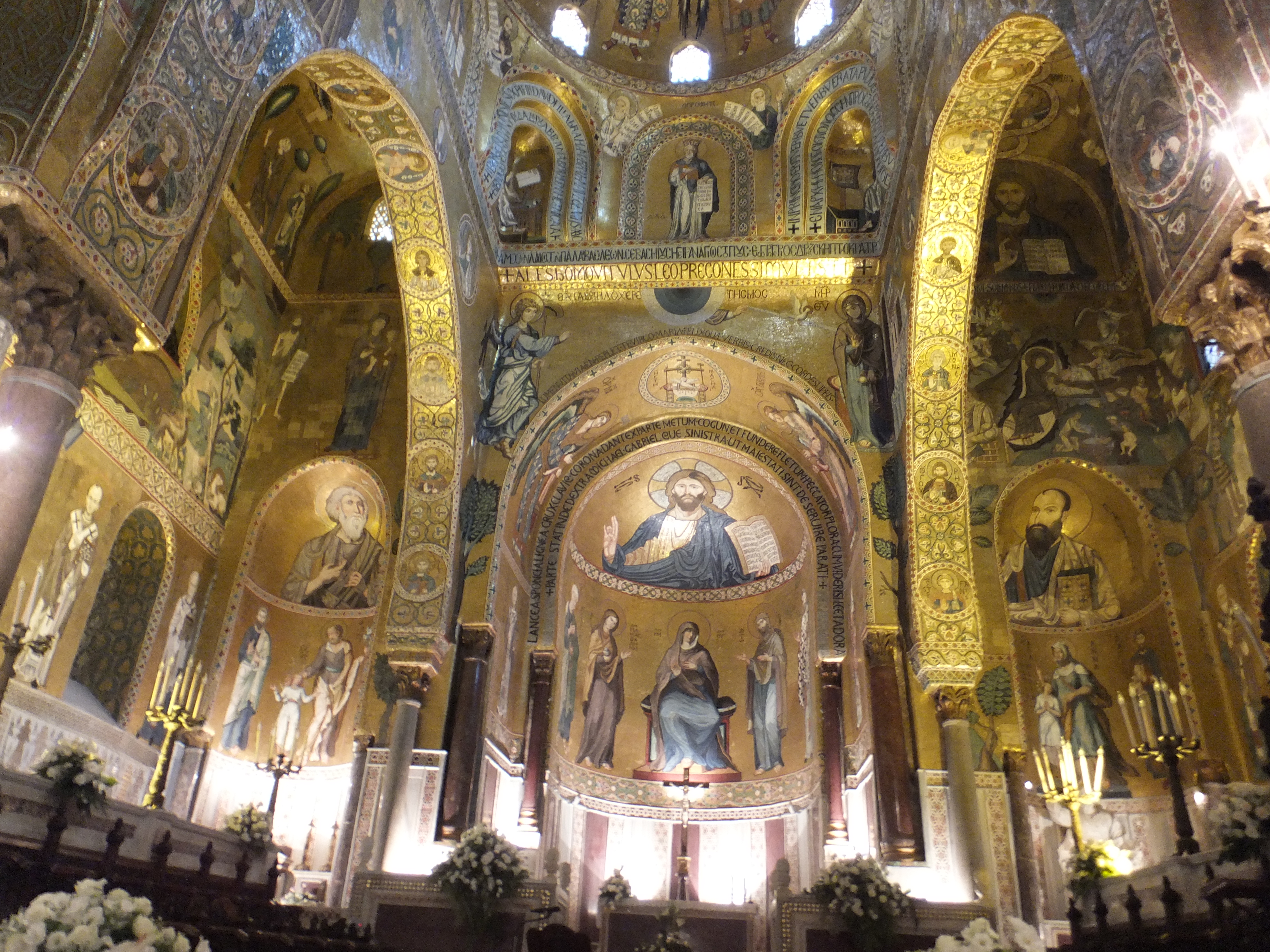
  • Palermo itself, with centuries of history and amazing attractions, like the Palace of the Normans, Cappella Palatina, the Cathedral, and of course much more
  • The Duomo of Monreale
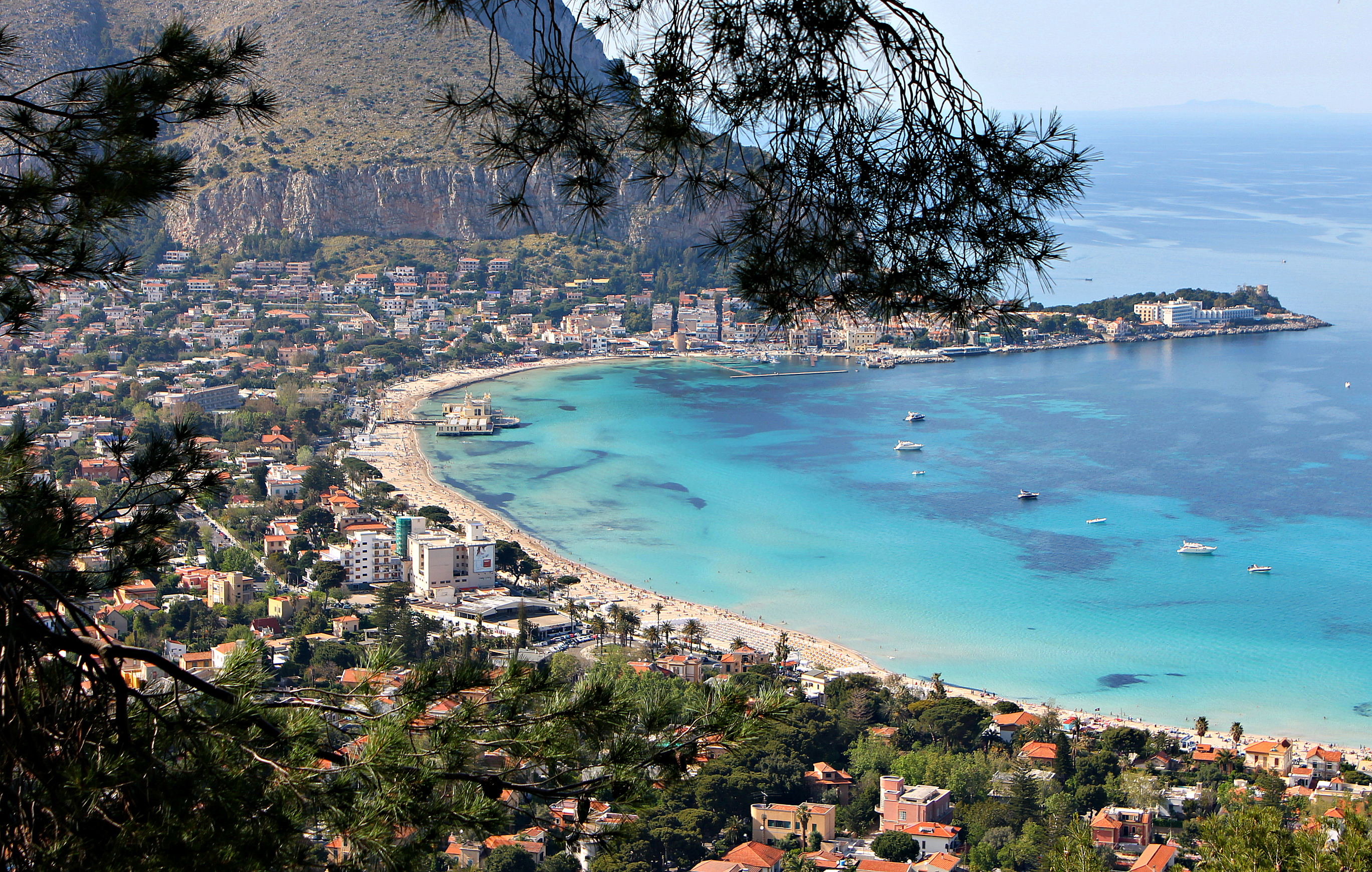
  • The beach of Mondello or Isola delle Femmine
  • To the West, San Vito lo Capo, a 2-hour drive from Palermo
  • More to the West, Favignana Island, reachable from Trapani by ferry
  • Or to the East, Cefalú

Cappella Palatina in Palermo
By Fintan Corrigan of http://friendly-hotels.com -
Own work, CC BY-SA 4.0,
https://commons.wikimedia.org/w/index.php?curid=35670228

The Gulf and beach of Mondello
By Andrea Calcagno from PALERMO, Italia - il golfo di Mondello, CC BY-SA 2.0,
 https://commons.wikimedia.org/w/index.php?curid=24992690
By Roberto Fontana from Mantova, Italia - San Vito Lo Capo,
CC BY 2.0, https://commons.wikimedia.org/w/index.php?curid=24319385
Favignana Island
By ChrisO at the English language Wikipedia, CC BY-SA 3.0,
https://commons.wikimedia.org/w/index.php?curid=864748

On the other hand, around Catania, we would visit:
  • Catania, itself, with sights from roman, medieval and baroque age
  • The Etna vulcano
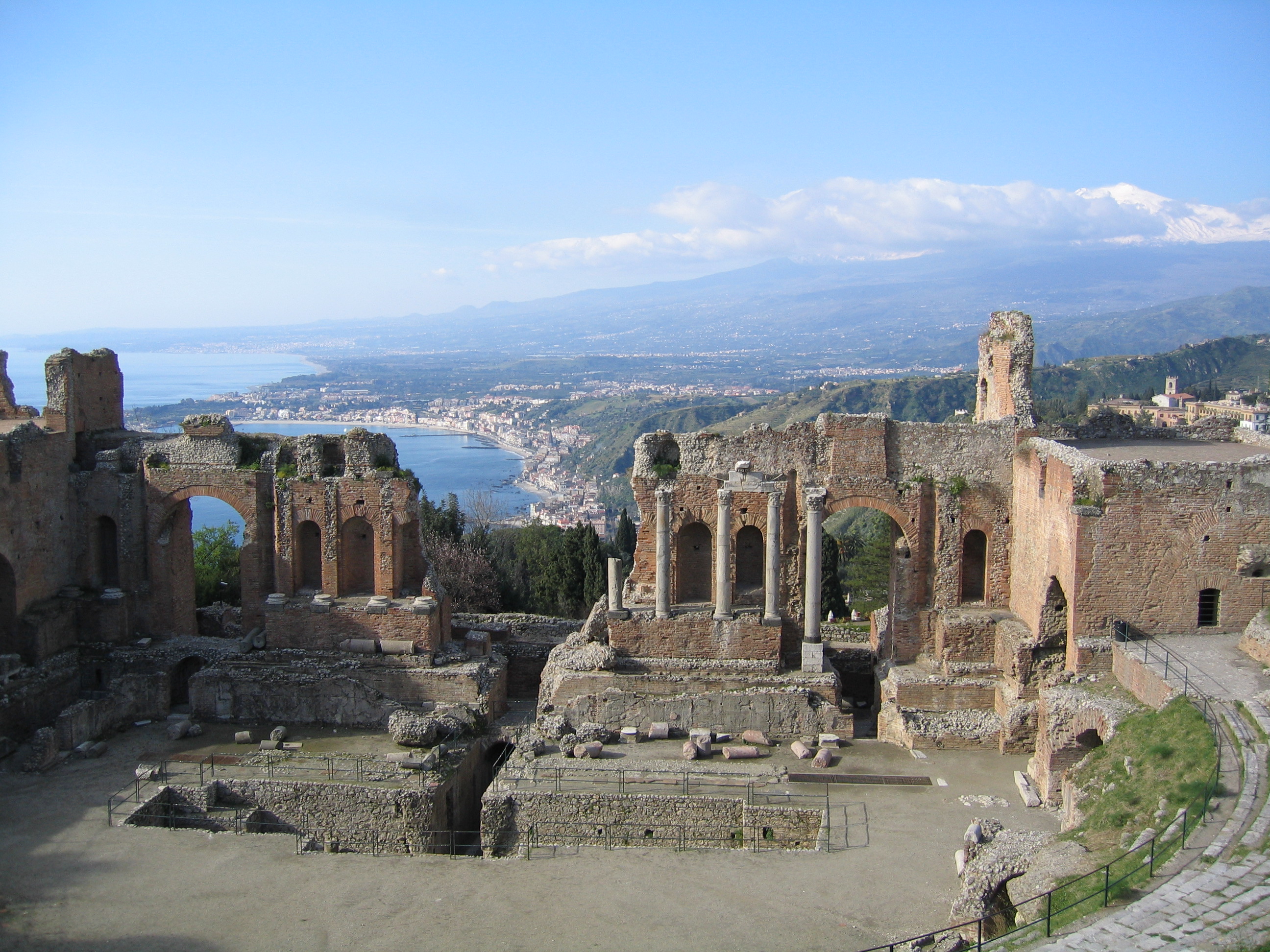
  • Taormina, its ancient Greek theatre, the beach and Isola Bella
  • Wine tasting of local Etna Rosso
  • More to the North, the gorgeous Eolian islands, with another vulcano
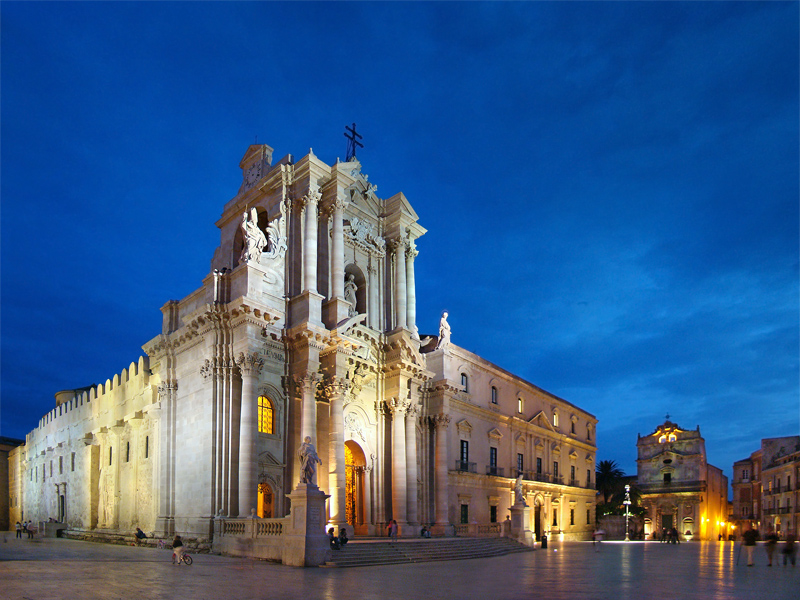
  • To the South instead, Siracusa and architectural marvels

Southern flank of Mount Etna showing lateral cones and flow from eruption of 2001.
By Wilson44691 - Own work, CC0,
https://commons.wikimedia.org/w/index.php?curid=26777320
The Greek Theater in Taormina
By Evan Erickson - Own work, Public Domain,
https://commons.wikimedia.org/w/index.php?curid=5744732
By Giovanni from Catania, Sicily - Eolian Islands from top of Vulcano island,
CC BY-SA 2.0, https://commons.wikimedia.org/w/index.php?curid=2139853
Duomo Square in Siracusa
By Tango7174 - Own work, GFDL,
https://commons.wikimedia.org/w/index.php?curid=15545258

And what about Agrigento and its incredible Greek temples?

Temple of Concordia
By General Cucombre from New York, USA - Valle dei Templi 3214
Uploaded by Markos90, CC BY 2.0,
https://commons.wikimedia.org/w/index.php?curid=22793141
It's very motivating that many itineraries available online, like this by Frommers, this by Sicilian Secret Tours, this by the Telegraph, this by Lonely Planet,  or this generic advice on Eastern Sicily by the Guardian, include A LOT of sights, which makes me hope that the distances are manageable and the crowd is not overwhelming.

More research is needed. But we are so excited! Have you ever visited Sicily? What do you advise? Let us know! :)


Wednesday, 22 February 2017

Our video in Trieste, Italy

Enjoy some warm Italian sun, gorgeous architecture, a glimpse of sea and cool live jazz music in the video of our city break in Trieste :)


And find our full itinerary here.
Let us know what you think in the comments! Cheers!

Saturday, 19 November 2016

City break in Trieste, Italy

An Italian seaside city with an interesting historical background, located very close to our home in Budapest: Trieste was the perfect destination for a city break at the end of August! It satisfied all our cravings after two summer months at home: a new destination for both of us, sun and sea, Italian food, urban exploration, and the delicious feeling of finally doing what summer is made for.

Piazza dell'Unitá, Trieste
A bit on purpose and a bit by chance, we timed our activities there very well. We arrived with Blablacar on a Thursday evening, just in time for the sunset: we walked from the train station to the city centre, admiring the reflection of the setting sun on the sea and the warm light on the magnificent buildings of Piazza Unitá, the main square. Our Airbnb was a cute tiny minimal studio, two streets away from the sea promenade and from the main square - in the building where James Joyce used to come and, ahem, spend some quality time with the local ladies. Did you even know that Joyce spent 15 years in Trieste?

A couple of words about Trieste: even though I was well aware of where it is, it wasn't until the second evening that I realized that the sun was setting in the sea. Wait a moment: doesn't the sun set in the sea only on the Western coast of, well, everywhere? We're in Eastern Italy, so how is that possible?? Well, Trieste is basically in Slovenia, almost in Croatia, so it's not really Eastern Italy as much as the Western coast of the Balkan countries... So there is enough space for the sun to set in the sea. Nowhere else in Eastern Italy you can see the sun setting in the sea. How cool is that?! (Ok probably it's possible in Puglia, in Gallipoli and around there, but never mind)

Stazione Rogers bar
We started off with the right foot at one of the best pizzeria in town, DnapoliMaestri Pizzaioli. We received a couple of proseccos while waiting for our table and ended up chatting with another couple of foreigners, Israeli guy and Taiwanese girl, travelling through the Balkans. Of course, they had Couchsurfing experience! It's quite a common trait of so many cool and social people we meet :) The pizza was simply amazing, anything else passing by us also looked delicious, and we spent only 25 euros for the two of us! Afterwards, we followed my friend Giada's advice and took a stroll along the beautiful sea promenade - imagine historical Austrian-style buildings on your left, pavement dropping into the sea on your right, and sailboats parked in small club marinas. At the very end, behind a weird curvy small building, there is Stazione Rogers: a bar built inside a caravan, with a DJ set on the side, surrounded by pallet furniture and protected from the main street by a set of plants in vases. The cocktails were great and the atmosphere was so relaxed and free: we spent quite a while people-watching, admiring the unique and cool outfits of guys and girls, relaxing on a Thursday evening and probably procrastinating the studying for the September university exams. It felt to me like travelling in the past!

We planned to spend Friday exploring the city, and to use Saturday to go to the nearby city of Gorizia and to the seaside outside of Trieste.
One of the best feelings for us - and one of the things I really miss of Italy - is breakfast: turn one or two corners from wherever you are, and you will find a café, serving tasty pastries and great coffee, just waiting for you to sit down and relax for 15 minutes - or not! The counter always has space for a standing flash break.
Trieste walking tour
As usual, we passed by the info point, where I was glad we queued and spoke with the friendly  and knowledgeable lady: for only 4 euros each, we got and audio tour and a small map that guided us around the centre and through the history of the city. It can probably be completed in just a couple of hours by very efficient travellers, but we took our time (and a lunch break), so we spent approximately 5 hours. It was really well done, a captivating blend of information and story-telling: first some history of the city and the area, then up the hill of San Giusto to visit the ancient roman and medieval areas, then down to the squared Theresian district, built by the Austrians in the 1800, and back to Piazza Unitá through the Jewish district. (Post-travel research: this guide looks very thorough!)

View from the bell tower of San Giusto
The view from the bell tower of top of San Giusto hill was gorgeous and worth the effort, as it encompasses the sea, the city, the hills and the Fortress just next to the Church. We loved how visible the layers of history are, in this area of the city: part of the roman Arch of Riccardo is actually inside a house; the church of San Giusto (1320) is itself the union of two older churches under the same roof, with stunning byzantine mosaics inside, and showcases on its facade two cannonballs fired at it during the Napoleonic wars; between the winding streets that connect the low and high parts of the hill, there is a whole Roman Theatre, well renovated and very evocative.  It's located quite inside the city from the sea promenade, but back then it was the welcoming sight for sailors: it's magical to stand there now, almost 2000 years later!

Irish writer James Joyce
After a delicious lunch at Eppinger, we continued along the regular streets of the Theresian district, a beautiful fusion of Neo-classic, Neo-renaissance and Eclectic architecture. Saint Anthony square  is the symbol of the variety of people, languages and religions that populated this city over the centuries: you will find there historical coffee houses, the Neoclassical Saint Anthony church, the Serbian Orthodox Church of Saint Spyridon, the statue of James Joyce on the Red bridge, and the Canal Grande built by wish of Austrian Empress Theresa. Not far from there is Piazza Oberdan, the starting stop of the Opicina tramway, which turns into a cog railway to climb up the hills and impress you with the best view of the city and the gulf: unfortunately, due to an accident on the tracks, it was closed.

Palazzo del Governo
Piazza della Borsa and Piazza Verdi led us to the narrow alleys of the Jewish neighbourhood (Via Beccherie), before bringing us back to the magnificent Piazza Unitá. The Palazzo del Governo, with its delicate golden and colourful mosaic decorations reflecting the sun, is definitely be one of the most beautiful buildings we have ever seen; the square itself, the largest seafront square in Europe, is simply stunning. 

Miramare Castle
A quick and delicious ice-cream at Jazzin and we were off by bus (line 6 or 36 from the train station) to visit the Miramare castle. Located 10 km North of the city, it was built from 1856 to 1860, for Austrian Archduke Ferdinand Maximilian, a magnificent example of eclectic architecture designed by Carl Junker. Reaching it from the side of the sea, through the southern main gate (in the direction of Trieste) and the park, it looks like a big white cube sitting on the edge of the rocky promontory, but as we got closer we noticed the delicate decorations on the external walls, the modest but still imperial entrance, and the distinctive feeling of the money and care that was put in the building and in the park.
We were quite tired, so we didn't spend a long time visiting the apartments (8 eur entrance fee), but they are so magnificent it could be easy to spend a couple of hours in there. The luxurious fabric on the walls, the intricate details in the wood carving of the cupboards and wardrobes, the historical paintings on the walls and the surprising frescoes on the ceiling... Everything tells the story of the Archduke and his passion for botany, his wish to turn this barren promontory into a botanical garden with species from around the world, his planning of the palace, the interiors and the garden itself, which he experienced for so little after he was crowned Emperor of Mexico and was killed there only 3 years later. The weather was so warm that we enjoyed much more just strolling around the castle, down to the quay by the sea, and then through the woods to the Grignano marina. We waited with a spritz for the ferry (timetable here for Trieste-Grignano) that took us back to Trieste, a 40 minutes trip perfectly timed with the sunset, portraying the coast and the castle in a magical golden light, so gorgeous I even shot a video! If we win the lottery, we are definitely buying a couple of rooms overlooking the sea, and a helicopter for quick travelling over the weekends :D
We discovered Via Torino for dinner: even though there was some waiting time at Siora Rosa, the traditional dishes of meat and fish were delicious, the original hearty local cuisine. Via Torino is a long sequence of fancy bars and restaurants, closed to traffic, where a huge crowd enjoys the warm temperatures and the cool drinks outside, chatting and moving slowly from bar to bar. After only one day in Trieste, we had the strong feeling that it must be a good place to live :)

On Saturday, even though I couldn't read properly the departures and arrivals board at the train station, we had a lovely day. After missing the train to Gorizia, we decided to starti with Barcola beach, where the lack of sand is irrelevant: you just sunbathe on your towel on the hard pavement and climb down the rocks and stairs to have a swim in the cool sea. Finally, 45 minutes of Italian summer for us! I was ecstatic!
Tagliata and sausages at Da Gianni
Later, a nice train ride between the hills and the sea brought us in 40 minutes to the city of Gorizia, whose special feature is that it is located on the border between Italy and Slovenia: Gorizia is on the Italian side, and Nova Gorica is on the Slovenian one. Our destination here was the Trattoria Da Gianni, famous for its tasty local (Italian/Balkan) menu, but most of all for the epic size of their portions. Everything is served on a pizza plate: pasta, wienerschnitzel, meat, everything! We ordered a beef tagliata (thick slices) and Balkan cevapcici sausages, and the tagliata was one of the most mind-blowing meals ever, so juicy and tender and simple... Absolutely memorable, and cheap! The waitress brought us take-away boxes without even asking :)

Italian-Slovenian border
I was inspired by Mhoek on Instagram to go to the train station of Nova Gorica. The local bus dropped us at the end of Via Caprin, in Italy; 50 meters away from there, on the other side of the square, is the train station of a Slovenian city, and no barrier in between. Stone flower pots mark the border, with Italian cars parked on one side, Slovenian on the other; in the centre, a circular area, just a step higher than the rest of the square, and in the centre a metal plaque, where a fence used to be. My mother actually remembers the fence, when she stayed at a hotel at the corner of the square, 30 years ago; now, from that corner, it is quicker to go get a coffee at the Slovenian bar of the station, than at the coffee house at the end of the Italian street. It was so magical to be there, to feel so free to jump from one country to the other, so grateful for our passports... And it was impossible not to think of the thousands of people who are not so lucky and embark on months-long ventures to cross these borders and reach Europe.
We took our time to cross the simple city centre of Gorizia, which didn't have any special attractions besides the castle sitting on top of the hill. We enjoyed another perfect sunset in Trieste, eating another delicious gelato from Jazzin, and relaxed all evening at Stazione Rogers, still too full from lunch to have dinner. We even got lucky, as there was a live concert of a local jazz band, the FatSlims! A reminder of something to search for when planning our future holidays :)

We left with Blablacar on Sunday at 9am, and even though I wished we had just one more morning in Trieste, it was actually great to arrive to Budapest at 3pm and have time to unpack and unwind.

Must see in Trieste:
  • Piazza dell'Unitá and the promenade
  • The Cathedral of San Giusto
  • The Theresian district
  • Miramare Castle

What did we miss?
  • The Opicina tramway and the beautiful view from the hills
  • All museums, I was particularly interested in the Old Hydrodynamic Plant - in my head a cool industrial steam-punk museum - and also the modern art gallery of Museo Revoltella should be great
  • The exploration of the old harbour, near the station
  • Also of the other side of the harbour, to the south
  • Hiking in the nearby Carso hills
  • A half-day trip to the village of Muggia, which resembles Venezia
  • The Empress Sissi statue in Piazza della Libertá (Liberty Square) in front of the train station

It would have been easy to spend a couple more days in Trieste; we'll keep these attractions for our next visit.


Did we miss something else? Was our story useful to plan your trip? Let us know in the comments! More pictures are on Instagram and soon the video will be ready :)
Cheers, Giulia and Darek

Sunday, 14 September 2014

Croatia, Split: seaside edition

Croatia is famous for its transparent sea, clean pebbles beach and intimate bays. During our holiday in Split, we went to three of them! It was such a positive change from the Rimini Italian beach I am used to: in Croatia you may have to walk a bit (and on those pebbles it's not exactly comfortable) but it is not hard to find a hidden and secluded place to have some quiet.

As we were staying on Marjan hill, we started by exploring that area. The first beach we went to is Kašuni beach (map), located on the south-west tip of Marjan hill. We walked until there (there is also a bus going there, n. 12), it was a beautiful scenery of wild gardens and woods of olive trees. When the road takes you down to the sea level, you get to a beautiful bay with a couple of bars at the beginning. Walk to the right until the middle of the bay to find some quiet and to enjoy the view of the islands in front, and start wondering about leaving your job and spend your life sailing :)

The second beach we went to, after steaming for a very hot morning in the centre of Split, is Bačvice beach (map), famous for its sandy shores and the "Picigin" ball game. It was quite disappointing: extremely crowded (maybe because it was a Sunday), the sand was actually dark and heavy and seemed dirty... perhaps I had higher Caribbean expectations? You can get there with a short walk from the city centre, and keep walking bay after bay until you find a free spot. There are lots of stands of sandwiches and fries, some restaurants and bars, and tables to play chessWe finally settled down at the Ovčice beach and had a nice afternoon, watching funny and quiet kids playing (a relief for my ears used to shouting Italian kids) and swimming over to some rocks large enough to climb, lay down on and sunbathe. At sundown it was much better


The last beach we went to was the one right in front of our place, Jezinac (or maybe Kastelet, they are next to each other): pebbles and clear water, a view on the mountains in the back and the islands in front, and a bar with nasty waitresses nearby. We even bathed there under the moon on the last night!! The path alongside the sea, from the city centre, is magical.


We also devoted one day to a catamaran excursion with Summer Blues. Among the wide range of choices on the internet and on the pier of the Riva downtown, this seemed the best value for money: a day-long excursion 9-19h on a brand new catamaran for 30-40 people, with sandwiches, salad, fruit included, beer and soft drinks all-you-can-drink. The itinerary start from the port on the Riva of Split, takes us first to a bay in Brac island, then a bay in the tiny islands of Pakleni, around 15h a short visit to the town of Hvar, and a final bath in a bay in Šolta before returning to the Riva of Split. The DJ put on a great soundtrack of every possible genre and all we had to do was lay down on the deck, sunbathe and sip beer, or jump down and explore the clean sea with the goggles available. Bathing in the cool and clean water was such an enjoyable feeling! Somebody of the group even went to the "shores" of the islands, but they were quite rocky and required climbing (on the catamaran there was an emergency kit for cuts). The panorama of the islands was so authentic: little colorful houses hidden in tiny and deep bays, yachts and row boats coming in and out, trees coming down to the sea, larger towns climbing the hills like Hvarand this peaceful Mediterranean feeling over it all. It was so windy and pleasant that we got quite a sunburnt! We were considering a cheaper solution: taking the ferry to Brac island and then driving around, or taking public transportation to the Zlatni Rat beach, but in the end we were very happy and satisfied with our choice.


Destinations for the next trip: Zlatni Rat beach on Brac Island, Trogir, maybe Sibenik, and of course, Dubrovnik!

Tuesday, 26 August 2014

Croatia: Split - summer trip 2014

A Polish, an Italian, an English and a Hungarian go to Croatia. Oh yes, the months in an office made us long for seaside and freedom! After much debating and asking for information, we decided for Split: interesting city, beautiful beaches in the surroundings, affordable flats on Airbnb, reachable by car overnight. Last but not least, the National Park of Plitvice was (more or less) on the way back to Budapest!

From love-croatia.com
Croatia is looooong! We thought about going to Dubrovnik (the set of Game,of Thrones!) but Split was far enough for just a 4-day holiday. It is located in the south of the Croatian coast, on a small bay, protected by mountains behind and by the big islands of Brac and Hvar in front, among many others.
If you arrive from the inland highway, you will feel like you're slowly diving into a mundane and bad-looking mass of overgrown white residential buildings, but  the tiny city center in the palace of Diocletian is worth the trip. We were staying on the southern side of the hill of Marjan, the green lungs of the city, close by to the west. It took us around 20 minutes walking to get to the city center.

It was around 8pm on a Saturday night when we set off to explore the town. We approached it by the west quay, the catwalk of dreamy yachts. There was still light, illuminating the tower of the cathedral on the other side of the bay, the ugly residential buildings in the background and the high mountains even farther, but we were too busy planning to take over a yacht and starting a new life as rich pirates :D
Long story short of Split: roman emperor Diocletian retired there and built his palace in 305 AD. Later on, the city was dominated by the Byzantine Empire, the Venetian republic, the Ottoman empire, the Austro-Hungarian empire, and finally it was part of Yugoslavia within the Republic of Croatia. Yes, they were also independent from time to time.
Well, you can walk across the city center in 10 minutes (ok, 15, especially if you're fighting against the crowd), but you can see all of the architectonic styles proceding from these ages, and sometimes all in the same building. At the edge of the city center is the Prokurativ square, which looks like a mini Saint Mark in Venice. After that, a Medieval maze of tiny streets full of shops, homemade jewels, unique designer t-shirts, chocolate, bars and restaurants will start to challenge your sense of orientation. Reach the National Square (Narodni square) and enter Diocletian's palace through the Iron Gate and open your eyes: it's unbelievable.


The external wall was built by the square-minded and reliable Romans, but there are random arches over the vaults of the gates, and there are windows cut in the middle of the ancient wall. The white stones of the streets have been polished by centuries of travellers exploring the city, the streets are so crowded and yet so clean, and you are aware that they should be straight but the buildings are taking over, and there is an amazing smell of pizza pulling your nose here and there, but concentrate on your eyes! You can see the effects of time and imagine people of different ages, Romans with togas and noblemen of the Middle Ages and lords from Venice, all of them charmed by the grandiosity of the palace of the emperor, all of them firmly decided to take a piece of it to build their own house. The roman symmetry is lost in favor of creativity: new arches are built on top of the old ones but 20 centimeters to the right, others were bricked up and then opened again to fit a tiny window there, the streets become irregular and narrow until you have to "let people pass" before you can go yourself. And religion! Diocletian loved Egypt and imported lots of sculptures of mysterious black sphinxes, which were beheaded when Catholicism took over. The Catholics also turned his mausoleum into a cathedral, but the temple of Jupiter survived. Within the Palace there are also the third oldest Synagogue in Europe, an orthodox Christian church and Split's only mosque. 
The center of the palace is the Peristyl, a beautiful court where -of course- houses were built between the columns. In the evening you will find people sitting on the steps and musicians playing and entertaining. Also, take the stairs diving under the Peristyl to access a fascinating gallery full of handcrafted gifts and souvenirs, which exits to the Riva, the main seafront, another architectonic wonder. Standing over the Peristiyl is the symbol of the city, the tower of the cathedral (which originally was the Mausoleum, where Diocletian is buried: ironic how the tomb of a persecutioner of Christians became a place of worship!). From here, the best thing you can do is just to spend an hour or so wondering and getting lost. Let the city bring you to its most hidden corners, keep your eyes wide open and your camera ready: who knows what marvels you main stumble upon!


The magic of the city is painted with the amazing light that bounces from the clear blue sea in the clean air, travelling from the morning sharpness of the sun reflected on the polished white stones, to a warm and romantic evening shade, softly covering the alleys full of life, tables and exciting conversations. It is impossible not to be affected: it invites you, it stimulates you, it makes you crave for the perfect picture. During the day, the narrow alleys can be quite suffocating: escape to the Riva, the seafront, where the ancient connection of the city and sea is strongest, to relax and breathe. It takes no effort to imagine galleys and ships  bringing curious travellers, sailors and merchants to this charming town. But times changed: now you will see modern yacht built for extreme comfort, shiny tourism catamarans, and hidden to the right enormous ferries full of cars in their bellies ready to sail for Italy.
Just as it feels like a confusing maze at the beginning, it will take you a couple of visits to start finding your way around the center of Split. Our advice is to have a map, or a good memory, to take notes of the inviting restaurants and curious shops you will find, because there are so many! It's enjoyable and frustrating at the same time to walk on and on, even if the alley is so narrow it looks like a dead end -and usually it's not- only to decide that the bar you prefer was the one at the beginning. But no worries, there will always be a line of clothes drying, or a group of grandpas playing cards in the shade, to make you feel the value of exploring this Mediterranean jewel.


Our tools: a simple city map showing the city center and a wider view; a tourist newspaper called "Discover Split!" with a very detailed map of the Palace of Diocletian and tips on food and shops; the Use-it map by locals for young travellers, my favourite and most useful, I love the great combination of touristic and cultural highlights and must-see and the hidden and underground gems you would never find otherwise.